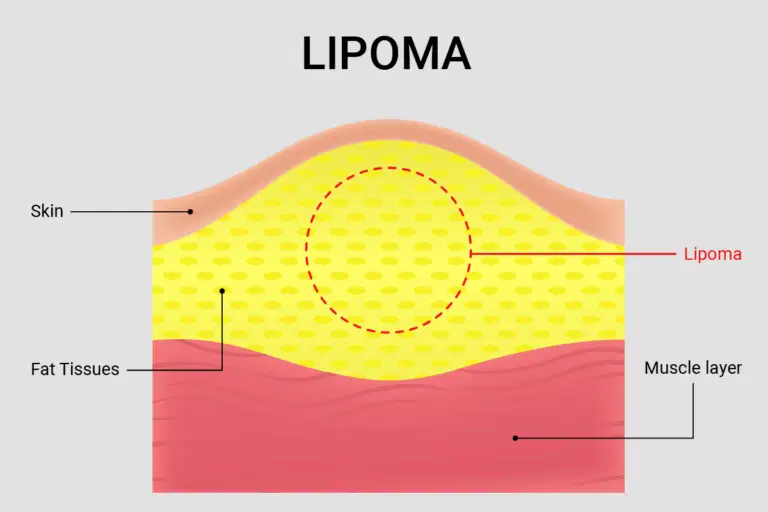

Finding a lump on your body can be worrying. You might be asking yourself: Is this serious? or Do I need to get this removed? In this article, we explain exactly what a lipoma is, how to identify one, and the science behind why they develop.
(Note: If you have already been diagnosed with a lipoma and are looking for removal options, please visit our Lipoma Removal & Treatment page.)
What is a Lipoma?
A lipoma is a growth of fatty tissue that develops between your skin and the underlying muscle. They are derived from normal fat cells (adipocytes) and are classified as benign soft tissue tumours, meaning they are non-cancerous and generally harmless. They often feel soft and “doughy” to the touch and usually move slightly under the finger when pressed.
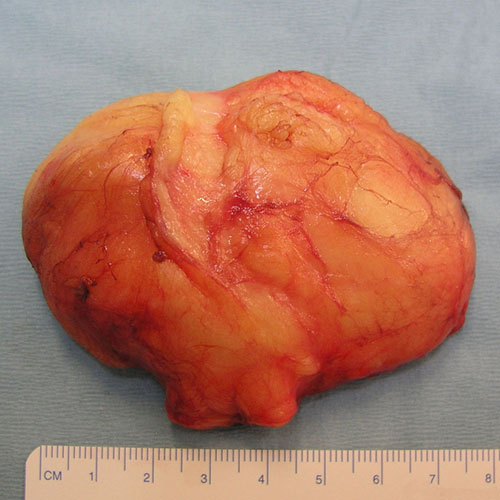
Common Symptoms: How to spot one
Lipomas are usually painless and asymptomatic, which is why many people live with them for years. However, you might notice:
- Texture: Soft, mobile, and rubbery.
- Growth: They tend to grow very slowly, often over months or years.
- Pain: While usually painless, a lipoma can cause discomfort if it presses on nearby nerves or contains many blood vessels (angiolipoma).
- Size: They typically range from 1cm to 5cm, but “Giant Lipomas” can grow much larger (over 10cm).
Where do they appear?
They can occur anywhere there is fat cells, but we most commonly see them on:
- Shoulders and Back of the neck
- Arms and Thighs
- Chest and Torso
What Causes a Lipoma?
The exact cause is not fully understood, but there are several factors involved:
- Genetics: There is a strong genetic link. If your parents had lipomas, you are more likely to develop them. Conditions like familial multiple lipomatosis cause multiple lumps to form.
- Trauma: Some evidence suggests a localised injury to an area can trigger the growth of a lipoma (post-traumatic lipoma).
- Age: They are most common in adults between 40 and 60 years old.
Is it Cancerous?
A standard lipoma is not cancer. However, it is important to distinguish them from a rare type of cancer called Liposarcoma. Liposarcomas often grow rapidly, are painful, and feel harder than a benign lipoma. Because it is difficult to tell the difference 100% by touch alone, any lump that is larger than 5cm, growing quickly, or deep within the muscle should be investigated by a specialist.
Diagnosis and Next Steps
Doctors can often diagnose a lipoma with a physical exam. However, if the lump is large or deep, an Ultrasound or MRI scan is the gold standard for diagnosis.
Can it be treated?
Yes. While you can leave a lipoma alone if it isn’t bothering you, they will not go away on their own. Surgical removal is the only way to permanently get rid of a lipoma. Liposuction is sometimes used but has a higher rate of recurrence.
When to see a doctor
You should seek professional advice if your lump:
- Is painful.
- Is getting bigger quickly.
- Is hard or immovable.
- Changes colour or feels hot.
Ready to discuss removal?
If you have a lump that is concerning you or you simply want it removed for cosmetic reasons, we can help. View our Lipoma Treatment & Removal options at the Manchester Lumps Clinic.